Crops NH
With 2.9 comes a complete revamp of the IC2 crop system in the form of a new mod created specifically for GT:NH called Crops NH. Crops NH aims to improve crop accessibility by addressing many long-standing issues players have had with IC2 Crops.
The short version

Since there is a lot to cover, here's a quick TLDR:
- It strips away IC2 Crops' black-box design and documents everything farmers need to know about their crops.
- It adds new growth and breeding mechanics to spice up gameplay and simplifies some existing systems when needed. The new soil mechanic is something you'll definitely have to get used to if you've done crops before.
- Statting crops is now easier than ever, since you can use fertilizer to prevent stat loss during breeding.
- It adds a new deterministic breeding system similar to the one for bees, on top of a revamped randomized breeding system, letting players target specific mutations while still using random mutations.
- Crops that can be processed into materials no longer require unholy amounts of UUM; they now use acid, just like combs, for processing.
- Crop death from a bad environment has been replaced with a sickness mechanic.
- Resistance has been completely overhauled to provide a set of scaling benefits you won't want to miss, and it no longer impedes crop growth, finally making it worth investing in.
- Air quality mechanics have been completely stripped, so you won't need to climb half the world height every time you want to tend to your crops.
- Crop analysis is now done all at once rather than having to pass it 4 times into a scanner, and the plant lens fully scans crops. With a portable scanner, you can even see the nutrient score of crops, telling you exactly how good your current environment is.
- The Extreme Industrial Greenhouse (EIG) no longer supports IC2 or CropsNH crops, as a new purpose-built multi-block has been introduced: the industrial farm (IF). Unlike the EIG, the IF is always better than a tier-equivalent crop manager and can be improved further. It's not fully end-game capable, but that is on purpose, as a proper end-game multi is being planned for 2.10.
world data - CropsNH #4, and 1 other change(s) here need attention. The steps are on the Before you update page.
Shipped in 57 pull requests
- Crop Rework 2.0 [world data] (CropsNH #4)
- Ic2 crop removal (BetterLoadingScreen #36)
- CropsNH Integration/IC2 Depreciation (Binnie #82)
- Replace CodeChickenLib (CropsNH #5)
- bump GT to account for https://github.com/GTNewHorizons/GT5-Unofficial/pull/5781 (CropsNH #38)
- Add better default tooltip and visuals handling for quest book. (CropsNH #108)
- fix: typo, dustSlufur -> dustSulfur (CropsNH #113)
- Adapt to BioLab Cleanup (CropsNH #180)
- adjust to recipemap changes in gt5 (CropsNH #217)
- Structure Tooltip API revert (CropsNH #223)
- apply the PlatinumSludgeOverhaul directly into CropsNH (CropsNH #237)
- Make getAnalyzedSeedData calls more verbose (CropsNH #238)
- Apply the NaquadahReworkRecipeLoader dynamic edit directly to CropsNH (CropsNH #239)
- Remove useless recipe removals (CropsNH #244)
- Remove more useless recipe removals (CropsNH #245)
- Track tired recipe component changes from core mod (CropsNH #252)
- Add documentation for the casing page used by CropsNH (GT5-Unofficial #6042)
- Removes Recipes For IC2 Cropnalyzer & Weeding Trowel (NewHorizonsCoreMod #1629)
- Switchout Stone Dust/Plate From CropsNH to Coremod (NewHorizonsCoreMod #1636)
- CropsNH Integration/IC2 Depreciation (WitchingGadgets #120)
- updated temp programmer art textures (CropsNH #12)
- forgot to add starwart texture because im forgetful silly billy (CropsNH #13)
- Revert easter egg deletion (CropsNH #14)
- Revert "updated temp programmer art textures " (CropsNH #15)
- Fix Stone Compression (CropsNH #18)
- Allow seed data parser to identify crops that cannot be crossed. (CropsNH #30)
- Fix duplicate mutation for Allium and Belladonna (CropsNH #32)
- Fix multiplayer-only issues (CropsNH #49)
- Make mica recipe use recipe eu/t instead of amp eu/t (CropsNH #53)
- fix incorrect formula for breeder nei tooltip (CropsNH #62)
- Fix april first easter egg (CropsNH #66)
- Change Get Mod Item type calls to only panic using GT's RA2 panic flags (CropsNH #73)
- Prevent crops from entering a quantum state on the client side (CropsNH #74)
- Fix incorrect block meta on migrated MTEs (CropsNH #84)
- Prevent weed and migrator crops from showing up in NEI (CropsNH #91)
- Fix alcohol fluid langs and lessen gt++ reliance for celled fluids. (CropsNH #97)
- Fix and improve waila tooltips (CropsNH #104)
- Fix a few typos/grammar (CropsNH #110)
- Fix thornvine typo (CropsNH #111)
- Fix Environmental module (Dead) recipe using wrong rotten flesh (CropsNH #114)
- Add missing bop mod loaded check (CropsNH #119)
- add missing indigo blossom recipes (CropsNH #131)
- Remove deterministic parent collision for tuff lily (CropsNH #137)
- re-add missing oil comb extraction recipe (CropsNH #159)
- Bauxia Balance Changes (CropsNH #172)
- Fix olivine typo (CropsNH #177)
- Make bamboo hurt entities again. (CropsNH #183)
- Allow mature crops to still check their growth reqs. (CropsNH #190)
- Fix pool mutation nei overflow (CropsNH #193)
- Localize crop stick scanner info on the client (CropsNH #196)
- Plumbilia should never have been in the reed group. (CropsNH #200)
- Make thornvine hurt players and a small mutation pool pass. (CropsNH #206)
- fix spelling of bamboo seeds (CropsNH #225)
- Fix typo cropsNH weed ex item reference (GT5-Unofficial #6031)
- Swap IC2 crops from NH crops in lang keys (gendustry #22)
- Revert "Swap IC2 crops from NH crops in lang keys" (gendustry #23)
- Kubatech tooltips [read before updating] (GT5-Unofficial #8293)
The New Soil Mechanics
Crops now have specific soils they like to grow on. Most food crops grow on farmland, while most stone lilies and other material-producing crops grow on stone; bonsais and flowers now grow on dirt or grass. Some require soul sand while others might require graveyard soil. You can see what kind of soil a crop needs by looking at its tooltip.
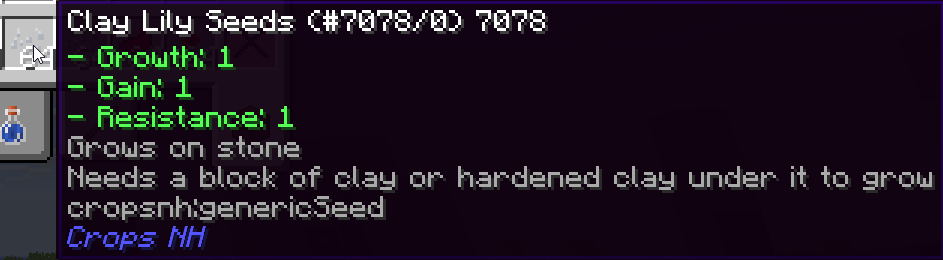
You cannot plant seeds in improper soil, and the game will warn you when you try. If the seed you're planting is an analyzed or an alternate seed, the message will indicate the exact soil you need; otherwise, it will give you a generic invalid soil message.


This new soil system is a core component of the new gameplay and is deeply integrated into the revamped breeding mechanics described in the next section. If you've done crops before, this is likely one of the most noticeable changes Crops NH made.
Do note that crop sticks do not prevent mob spawns. Farmland and other tilled blocks prevent spawns, but if you want to do the same for your other soils such as stone, dirt or grass, you'll need to either light up the area or "till" your soils with the Chisel mod. Most chiselled blocks prevent mob spawns and will be recognized as valid soils as long as they meet the general material criteria of the needed soil. E.g., chiselled stone works for stone. This also applies to many other modded blocks, so feel free to experiment with your farm designs!
Shipped in: CropsNH #16, CropsNH #63, CropsNH #75, CropsNH #263
Environmental Stats Rework
Crops NH replaces IC2's old humidity, nutrient, and air quality system with a unified system called Nutrient Score.
Air quality has been mostly stripped out, with the only remaining factor being the ability to see the sky. Begone are the days of building farms in the sky or optimizing the number of air blocks around a crop to maximize growth speed.
The number of dirt blocks below the seed is no longer a factor, greatly reducing the performance impact of crops when making multiple large fields.
The black box of biome humidity and nutrient values has been replaced with a more comprehensive system. Each species now looks for a small set of liked biome tags; a crop growing in a biome with one or two of these tags will gain large bonuses to its nutrient score.
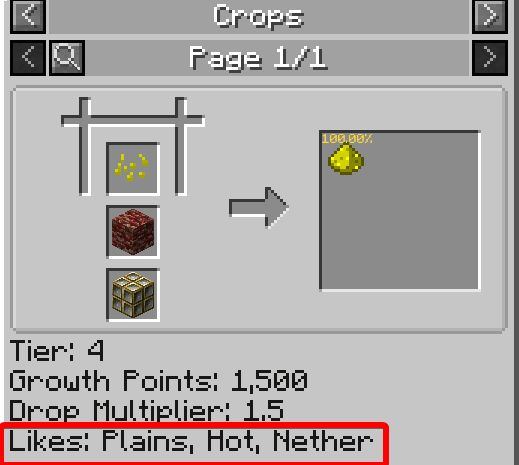
If a crop's biome contains no liked tags, biome humidity above 80% grants the same effect as having 1 liked biome tag present. You can see the humidity value for any given crop by standing on top of it and looking at the in-game info overlay at the top left of your screen:
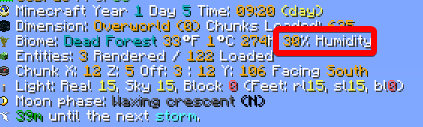
Note that the High humidity and liked biome bonuses are mutually exclusive, with preference given to the liked biome bonus. This means that you can't combine 1 liked tag and high humidity to get the same effect as having two liked biome tags.
Applying water and fertilizer to your crops now provides a scaling bonus that maxes out after reaching 100 units. By hand, you can apply only up to 100 water and 100 fertilizer, but a crop manager can store up to 200, keeping the bonus stable as your crops continue to grow.
You can calculate your Nutrient Score using the following formula:
- Every crop starts with 5 points.
- +2 points if your crop can see the sky.
- +1 point for every 10 water stored in a crop (up to 10 points)
- +1 point for every 10 fertilizer stored in a crop (up to 10 points)
- +14 points for every liked biome tag (up to 28 points)
- +14 points if the current humidity is above 80% and there are no liked biome tags
The maximum nutrient score is 55 (5 + 2 + 10 + 10 + 28)
Here is a calculator you can use to preview nutrient score and see how many growth points you'll be getting each growth tick: https://www.desmos.com/calculator/1nuecrg7hb
Alternatively, you can use a portable scanner to view a crop's environmental values directly.

A big change in Crops NH is that crops with an insufficient nutrient score no longer vanish; instead, they become sick (see the sickness mechanics section for details). The minimum nutrient score depends on the crop's tier. Higher tiers generally require a higher nutrient score, but in most cases high humidity alone is good enough for most players, though it won't be enough for long-term production. You can view a crop's tier by looking at its uses in NEI.
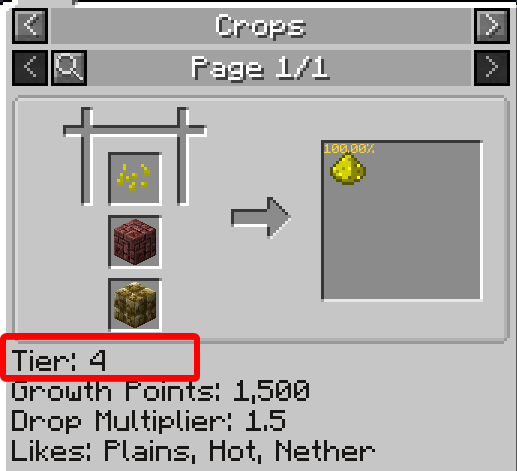
Here's a lookup to help you plan your starter farms:
- Tier 4 is the last tier where crops can be planted anywhere.
- Tier 5 is the last tier where crops can be planted anywhere as long as they can see the sky.
- Tier 11 is the last tier where crops can be planted anywhere as long as they are in a biome with at least 80% humidity.
- Tier 12 is the last tier where crops can be planted anywhere as long as they are in a biome with at least 80% humidity and can see the sky.
Shipped in: CropsNH #197
Breeding System Rework
Crops NH's biggest improvement to the breeding process is letting players stop stat loss while breeding by using fertilizer. As long as the parents are fertilized, no stat will ever go down while breeding, effectively changing the variation pool from [-2,-1,0,1,2,3,4] to [0,0,0,1,2,3,4]. As you can see, it doesn't actually improve the chance of a variation being positive; it simply sets a lower bound of 0 on the variations that can be applied to a given stat during a mutation.
Crops NH completely revamps IC2's mostly randomized breeding system, replacing it with 3 core pillars: Deterministic Mutations, Randomized Mutations, and Spreading.
The Deterministic Mutations System takes inspiration from Forestry's bee breeding system, requiring you to bring the right species together and to create the desired environment for the offspring. With a few exceptions, every crop in Crops NH has a deterministic mutation, so you can skip most of the guesswork and get what you want, as long as you can get your hands on the right species and create the proper environment.
The Randomized Mutation System, referred to as Mutation Pools, is a refined version of IC2's breeding system. All crops accessible before MV are now associated with a list of mutation pools. Breeding 2 or more crops that share the same mutation pool can create any other crop that shares that pool, as long as the destination matches the crop's desired growth requirements. The "as long as the destination matches the crop's desired growth requirements" part is important, as it often lets you narrow the list of potential mutations to a single species, effectively creating new "pseudo-deterministic" mutations you can take advantage of. For example, if you breed two different stone lilies together, having some netherrack as the subsoil will guarantee you'll get a nether stone lily every time. Deterministic mutations always take precedence over random mutations, so don't worry about having those 2 types of mutation compete with each other.
The Spreading System takes inspiration from Agricraft's own crop-spreading mechanic, letting you replicate a crop infinitely by placing a double crop stick next to it. This lets you set up a crop manager that covers a long line of crop sticks with weed-ex and fertilizer to easily improve your crops' stats. Spreading has a 50% chance to replace a mutation attempt, so if your destination environment is also valid for one of the parent crops, watch for unwanted spreading during breeding. To speed up random mutation and avoid unwanted spreading while breeding new species, take 2 crops that share 1, or maybe 2 pools, including the crop you want, without sharing its soil or sub-soil.
For those who have bred crops before, the biggest change will be the fact that growth requirements must be met for a mutation to occur. This applies to all three of the systems mentioned above. This helps prevent unintended tier skipping by ensuring players have access to the relevant materials to obtain a crop.
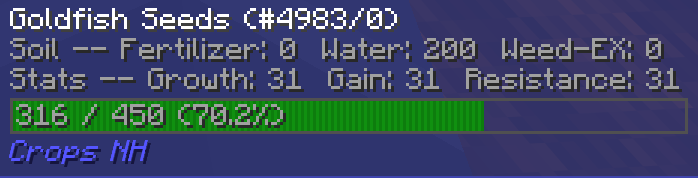
Another thing to note: crops can now all breed and spread once they reach 80% maturity. You can view a crop's growth progress through Waila:
Shipped in: CropsNH #19, CropsNH #80, CropsNH #112, CropsNH #262
Weed Rework and the Sickness Mechanic
As before, weeds will still pop up in empty cropsticks without any weed-ex, spread to nearby cropsticks, and retain their ability to transform dirt into grass. The main change is removing the weed item (weeds now simply drop tall grass) and removing their ability to delete crops entirely (though they can still cause endless problems if left unattended).
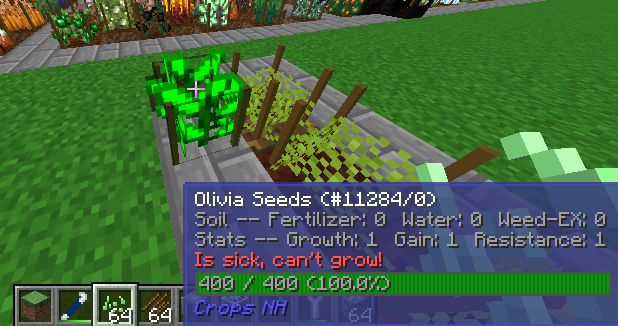
Instead of taking over crops and deleting them, weeds (and the crops that act like weeds) now spread a curable disease. Sick crops cannot grow, breed, or be harvested until they are cured. They also make the crops act like weeds, spreading this sickness all across your field if left unattended. You can easily identify sick crops by their green tint and tinted crop sticks, along with a message displayed in WAILA.
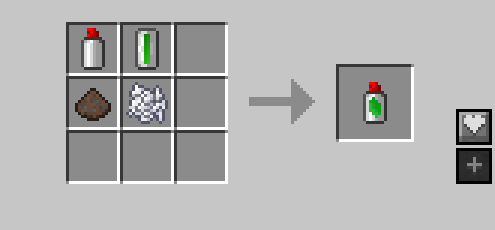
Plant Cure is made from enriched fertilizer, fertilizer, and bone meal, and it cures sick crops instantly while applying a small amount of fertilizer to prevent crops from falling sick too quickly if they are just below the minimum nutrient score needed to grow. When curing a field, it's best to ensure every crop has some weed-ex, usually spread using a crop manager. Otherwise, crops will continue spreading diseases to each other while you cure them, which can make curing larger fields particularly difficult. A high resistance stat will slow down the spread of the disease, but won't completely eradicate it.
Shipped in: CropsNH #11, CropsNH #92, CropsNH #94
Resistance Rework
Before CropsNH, resistance was a stat usually best left at zero, as it slowed growth while only slightly improving seed drop chance, marginally slowing weeds, providing slight resistance to trampling, and slightly reducing the chance of a crop dying in bad conditions.
With Crops NH, resistance no longer impedes growth speed and provides real benefits most players will want to use, making it a must-have for any farmer worth their salt.
- A crop's seed drop chance is now calculated as resistance/31, meaning that once you max your crop's resistance, you are guaranteed to drop a seed when breaking a crop, even if it's immature.
- This works best with the reworked spade, letting you easily create large fields as you harvest your existing crops.
- Trampling resistance now scales linearly with resistance, fully preventing it as long as running or falling from great heights doesn't destroy the soil.
- High resistance now gives a very high level of weed resistance, though it doesn't fully immunize crops even once you max your resistance stat.
- Past 23 growth, having resistance greater than or equal to the crop's growth prevents it from acting like a weed and spreading diseases to nearby crops.
- Crops with 31 resistance don't become sick if their environment isn't suitable; they simply won't grow.
Shipped in: CropsNH #60
Spade Rework
The spade now comes in 2 tiers: the Spade and the Reinforced Spade. The reinforced spade is a direct upgrade to the spade, available once you can make an MV metal bender.
Spades retain most of their previous functionality in terms of breaking crop sticks quickly, tilling the earth and removing weeds, though sneaking now prevents spades from breaking crop sticks when left-clicking to remove crops.
The main change you'll notice is how spades affect seed outputs. Previously, using the spade was an annoying mess with unintuitive usage mechanics. Players didn't know whether to right-click or left-click to improve seed drops and constantly went back to the quest to figure out how to use this simple tool.
Crops NH cuts out this hassle by simplifying how spades work. Spades no longer affect immature crops; they only do something when you right-click to harvest mature crops.
- The regular spade gives you the same chance to get a seed as harvesting a crop (resistance/31).
- The reinforced spade greatly improves the amount of seeds you can get while harvesting crops, once again scaling with the resistance stat. It effectively triples the output, granting you a guaranteed seed for every 10 points of resistance and an additional 10% chance for an extra seed after that.
| Resistance | Regular Spade | Reinforced Spade |
|---|---|---|
| 1 | ~3.2% for a seed | 10% for a seed |
| 10 | ~32.2% for a seed | 1 guaranteed seed |
| 25 | ~80.6% for a seed | 2 guaranteed seeds + 50% for an additional seed |
| 31 | 100% for a seed | 3 guaranteed seeds + 10% for an additional seed |
Shipped in: CropsNH #31, CropsNH #42, CropsNH #105, CropsNH #209
Introducing Enriched Fertilizer
As the name implies, Enriched Fertilizer is a more concentrated form of the regular liquid fertilizer. In most cases, it has 10 times the potency of liquid fertilizer. For Crop Managers, every L of Enriched Fertilizer effectively adds 10L of regular fertilizer to their inventory, and for the industrial farm, it cuts fertilizer consumption by 90% (rounded up).
This potency bonus is cancelled out when using the fertilizer upgrade on the industrial farm, so keep that in mind.
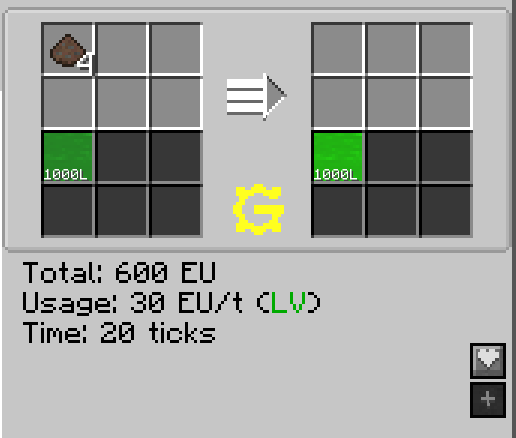
Producing it is fairly simple: it requires 1000L of liquid fertilizer and 4 fertilizer items.
Shipped in: CropsNH #132
Expanded Boot Protection System
Crops NH includes a new way to protect you from the negative effects of some pricklier crops. By wearing hazmat-providing boots, you won't take any damage or receive any negative status effects while walking through crops that cause either. Boots that only provide hazmat protection will take damage while protecting you, and those that provide space-suit protection will never take any damage. Early on, you can also wear leather boots to reduce damage taken and shorten the duration of negative status effects by 75%.
These boots provide damage reduction:

These boots provide full immunity, but take damage as they protect you:

These boots provide full immunity and do not take any damage as they protect you:
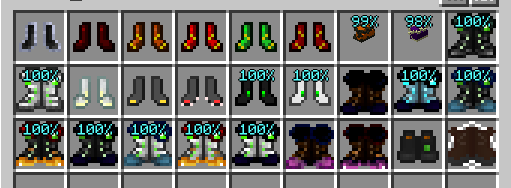
Sneaking also gives you full immunity to contact effects, regardless of what boots you're wearing.
world data - CropsNH #4
Shipped in: CropsNH #4, CropsNH #228
Crop Processing Rework
Crops NH completely overhauls material crop processing. Inspired by bees, crops that drop leaves that can be processed into ores now use tiered acids instead of UUM to create ores from nothing.
The costs and base recipe tiers have been adjusted to be mostly similar to combs, so if you've done bees before, you'll already have most of the knowledge needed. The main difference is that crops require a forge hammer instead of a chemical reactor, meaning that they don't benefit from the perfect OC of LCRs.
The ore quadrupling mechanics have also remained intact and now let you convert your crops into impure dusts or purified ores, depending on the circuit, when using an LCR. Regular chemical reactors can only duplicate ores into purified crushed ores, but forge hammers can always decide what output gets produced.
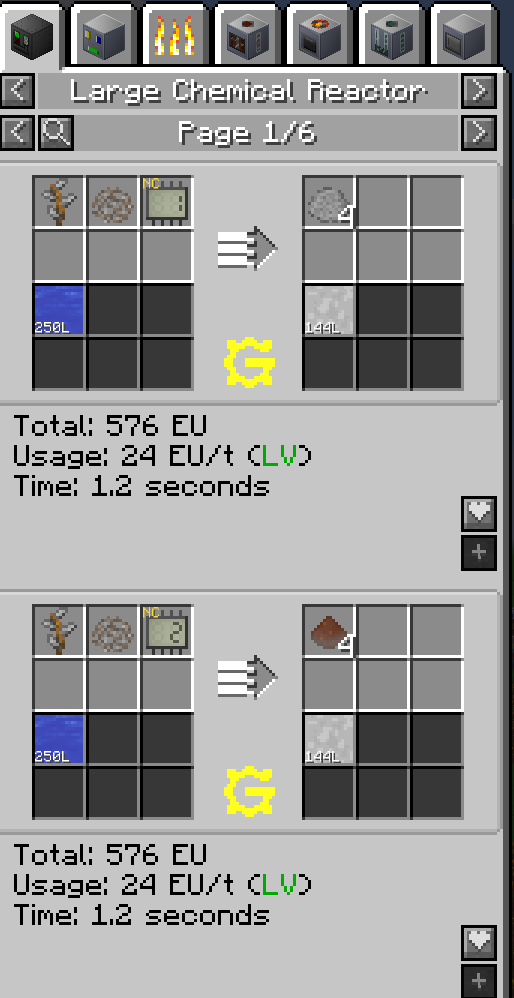
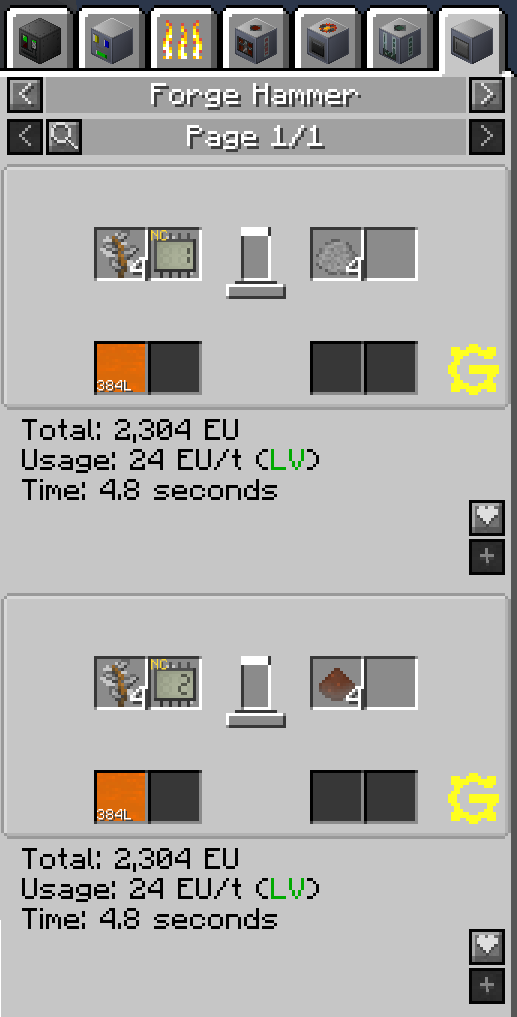
Shipped in: CropsNH #133, CropsNH #232
Crop Manager Improvements
- The crop manager now stores water, weed-ex, and fertilizer in separate "tanks." (These aren't actual tanks, so you can't extract what you put into them).
- You can now individually toggle all 4 of its functions (watering, weed-ex application, fertilization, and harvesting)
- You can now power it with a battery (or redstone dust if you want to be funny about it)
- It no longer voids excess harvests; it stores them in hidden internal storage and blocks harvesting while that storage still contains something.
- It now properly stops functioning if it doesn't have enough EU to do its work.
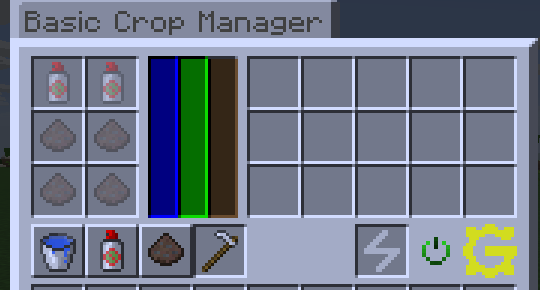
Shipped in 10 pull requests
- Add 🪫battery🔋 slot to 🌽Crop Manager 🍅 (CropsNH #116)
- Fix energy slot not doing the energy slot work because it was not an energy slot (CropsNH #243)
- MUI1 depreciation (CropsNH #153)
- Fix Crop Manager Lang Key (CropsNH #39)
- Fix ConcurrentModificationException in MTECropManager.harvest (issue #40) (CropsNH #41)
- Fix incorrect height diameter of Crop Manager tooltip (CropsNH #85)
- Fixed GUI for 🌽Crop Manager 🍅 (CropsNH #117)
- Fix Crop Manager showing only an empty water tank in Waila (CropsNH #191)
- Fix item stack map counts being lost on NBT load (CropsNH #254)
- Mini bugfix: crop managers water/fertilize/weedex broken crop sticks (CropsNH #273)
The crop breeder
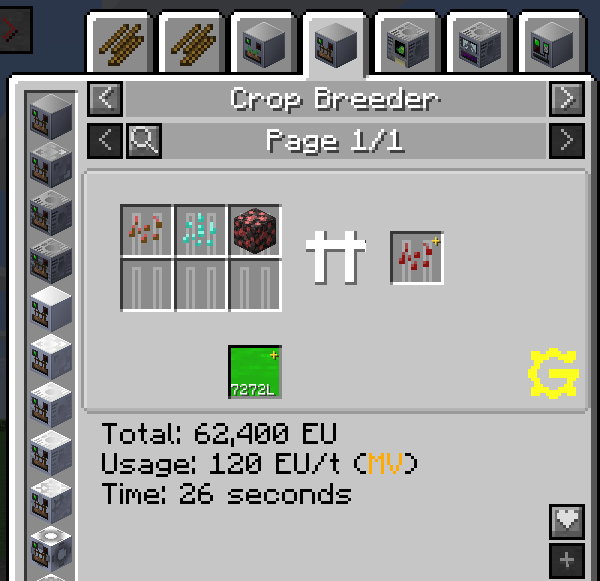
The crop breeder is a tiered, single-block machine that performs deterministic mutations. It is also required to breed all MV+ crops. It consumes the parents' seeds, a block of the offspring's sub-soil, and a large amount of enriched fertilizer that scales with the offspring's stats and tier. The stats will always be a rounded-down average of the parents without the usual variation you get by breeding on crop sticks. You can use this to determine just how much enriched fertilizer you'll need to breed any given crop.
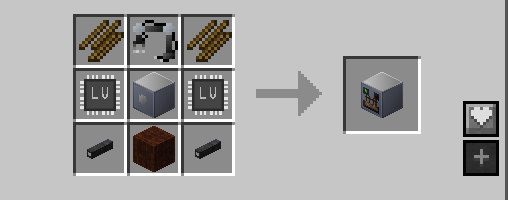
Crop Breeders don't start with a 100% chance of success; they start at 40% and improve by 10% for each tier after that, capping at 100% at ZPM.
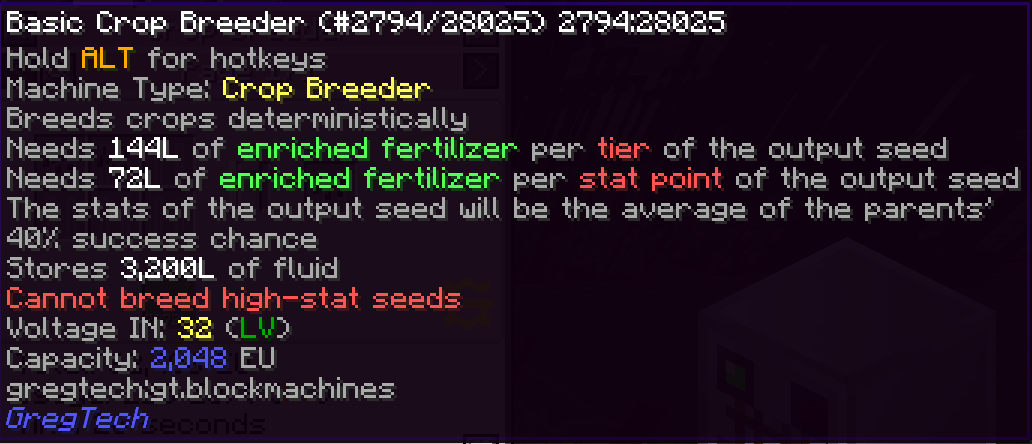
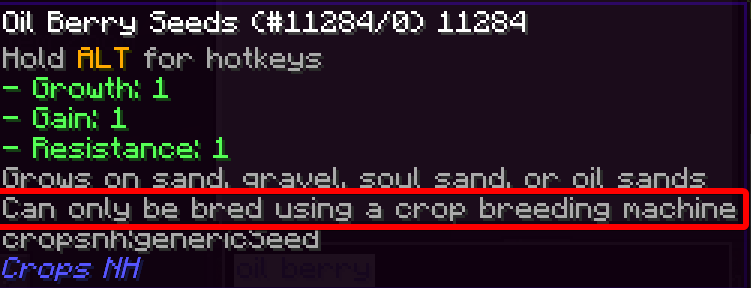
Some crops require a minimum breeding machine tier. Crops that require a breeder will always indicate it in their item tooltips and will show the exact machine tier you'll need when you look up the seed's recipes in NEI.
The LV and MV breeders lack the fluid capacity to breed maxed seeds, so you'll need to down-stat your crops if you've already maxed them. It's usually faster to cross-breed crops with a 1/1/1 crop obtained by planting an alternate seed and relying on random mutations to get a roughly 16/16/16 stat crop to breed with.
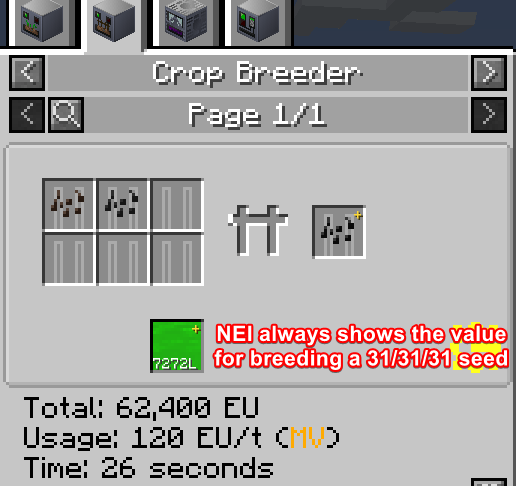
Some crops, like troll plant, also require additional catalysts that must be provided to breed them:
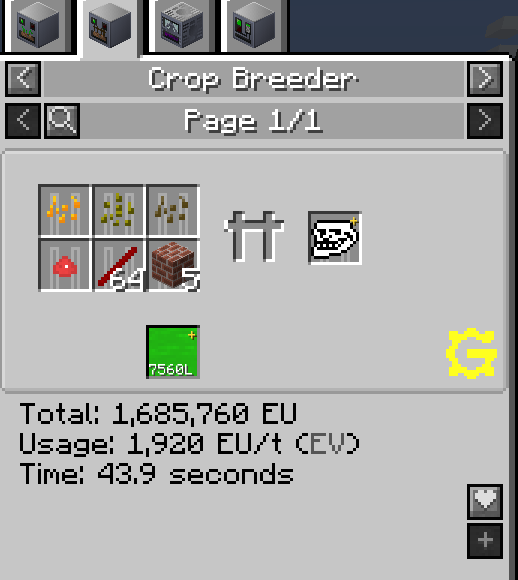
Shipped in: CropsNH #142, CropsNH #181, CropsNH #215, CropsNH #218
The seed generator
If you used crops before, you'll likely have shunned the existence of the gene extractor and the crop synthesizer, as the usage restrictions and replication costs simply made them not worth using for most things until you could get your hands on either the UUM multi in late UV/early UHV or only viable for something like the primordial berry, which required a UHV synthesizer to create.
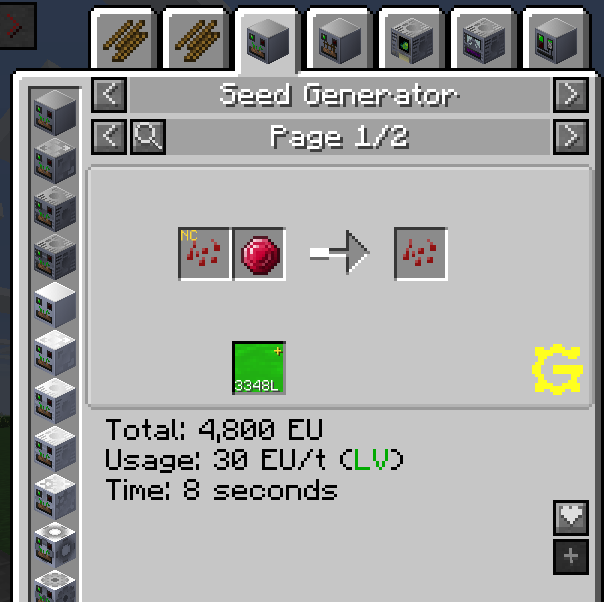
The seed generator replaces those two machines for most crops*. Like the breeder, the LV and MV generators can't replicate maxed seeds because of their small fluid capacity, and some crops require a minimum machine tier. The minimum tier for the breeder and generator is usually identical.
Unlike the breeder, the seed generator has guaranteed output and doesn't consume the original seed.
The generator also has its own NEI tab that shows which items you need to replicate a given seed and helps you calculate how much enriched fertilizer you need.
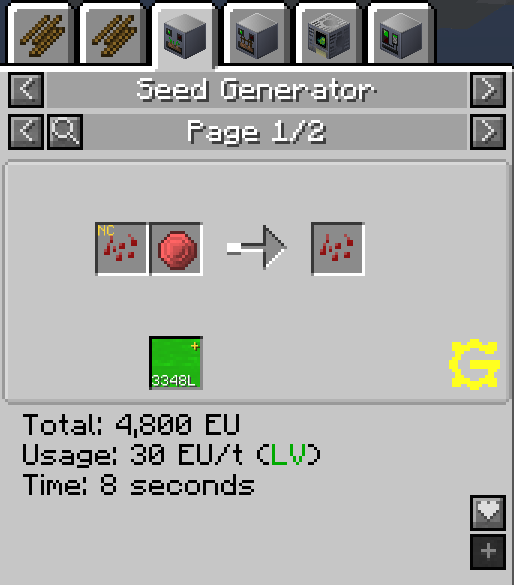
* The synthesizer and gene extractor were also reworked, and their usage restrictions have been greatly reduced; see the relevant sections of this document for more information on this.
Shipped in: CropsNH #146, CropsNH #241
Crop Gene Extractor and Crop Synthesizer Rework
As mentioned in the previous section, these machines were practically useless for most players, with a niche use for some higher-tier crops. This mostly remains as-is in CropsNH, except for removing the old crop-tier-based restrictions.
Instead of relying on the crop's tier, the synthesizer now uses bespoke tier assignments that match the crop's relevant tier.
Another change is that these machines are now available after EV, and their tiering starts at EV, since you can only make the data orbs needed to operate them once you reach EV.
Shipped in: CropsNH #33
The Industrial Farm
The EIG was the butt of many jokes for IC2 crops; it was laughably bad at its job and never became relevant at any tier. In most cases, crops lost relevance past mid IV, and its LuV requirement made it even more useless, since even at UV an EIG would get easily beaten by an MV crop manager.
The Industrial Farm addresses most of the issues that once crippled the EIG, and is unlocked in MV, a much more appropriate tier given the general relevance of crops post-rework. The main gist is that the industrial farm will always be better than a single-layer crop manager of an equivalent tier, and can now go much further thanks to its upgrade modules.
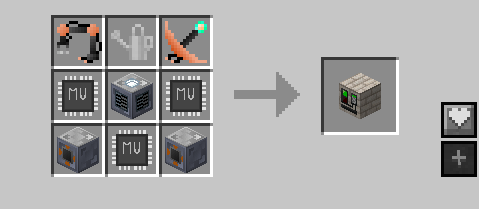
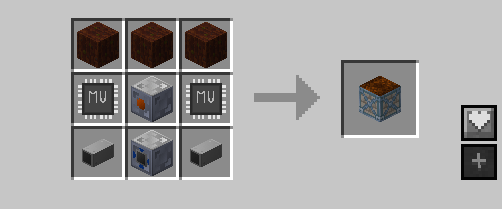
To build your farm, you'll need to grow some hemp, and macerate it into hemp hurds, then assemble those hurds into bricked agricultural casings:
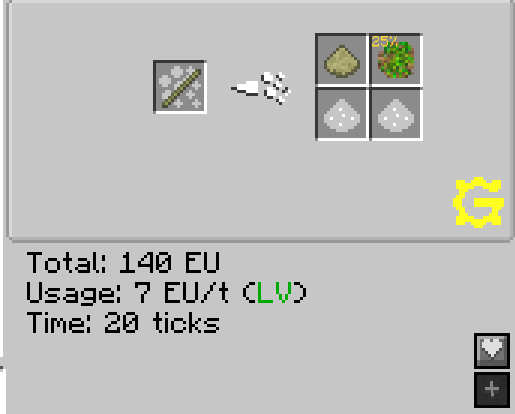
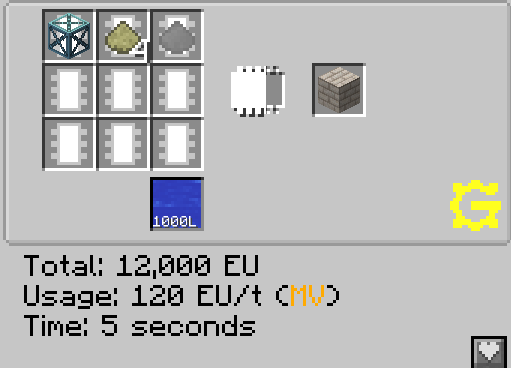
The Industrial Farm is a tiered multiblock. Each tier makes it one block longer, increases seed capacity (and therefore water and optional fertilizer consumption), adds 20% to its base harvest bonus, and raises base power consumption to the usual amount for a machine of that tier. The IF's production doesn't generally double with every tier, so it's generally advised to stick to lower-tier IFs for production unless the crop you're growing has a minimum seed bed tier.
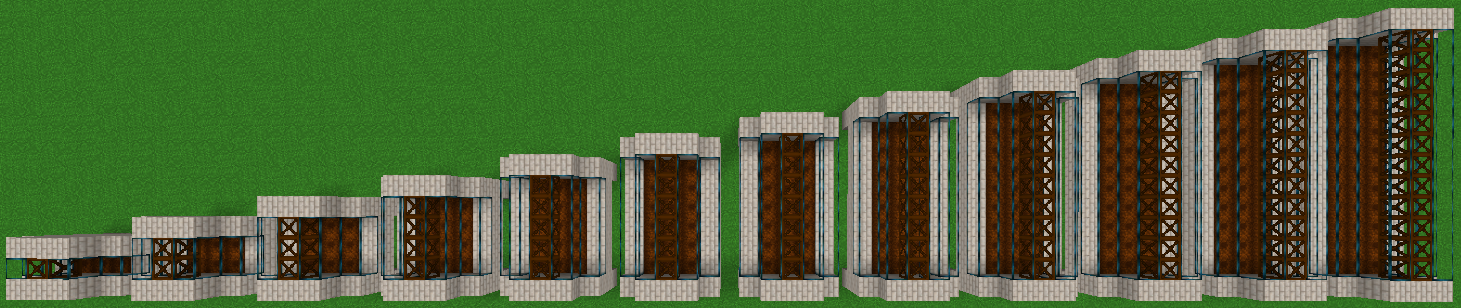
Seeds are inserted similarly to the EIG; you can either input them manually if they don't require a subsoil, or insert them via an input bus by first switching the machine to input mode if they do use a sub-soil block.

To run your Industrial Farm, you'll need a steady water supply. The amount depends on seed capacity, not the number of seeds stored inside the industrial farm. You can also optionally supply liquid fertilizer; this gives the crops inside the industrial farm the same bonuses they would normally get from fertilization (adding 10 to their nutrient score). The amount of fertilizer also scales with the capacity rather than the seed count. So it's always better to fill your Industrial Farms.
You can see the water and fertilizer needed for a given IF tier by looking at its core component: the Seed Bed. This is effectively an EBF coil equivalent for the IF. It dictates the capacity, length, consumption rate, and power cost.
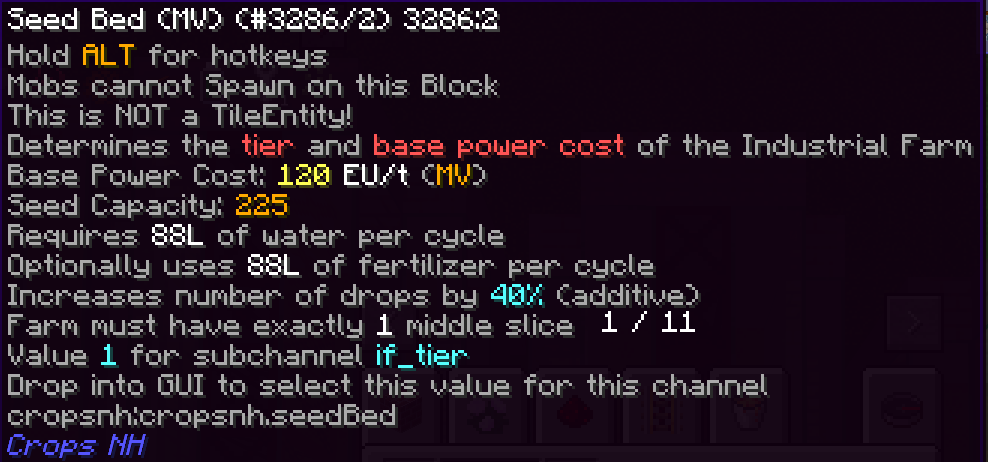
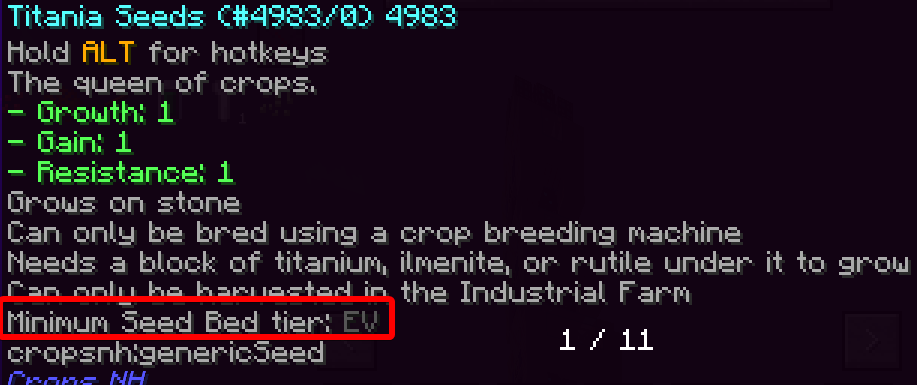
Some crops require a minimum Seed Bed tier; the seed's tooltip always indicates this.
You can upgrade the industrial farm with upgrade units that replace the wooden frame boxes on top. Like the seed bed, these upgrade units are tiered and must always match your seed bed tier.
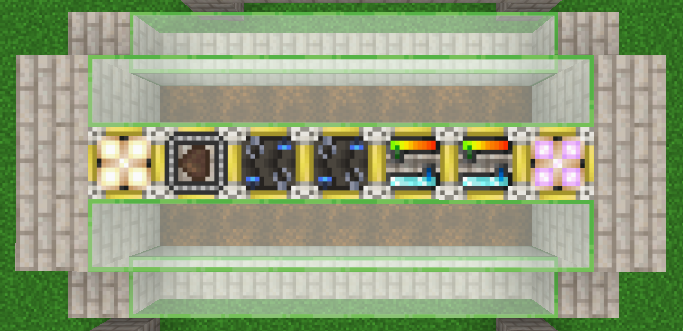
There are 5 types of modules you can add to your Industrial Farm:
- The Growth Acceleration Unit (GAU)
- The Fertilization Unit (FU)
- The Advanced Harvesting Unit (AHU)
- The Environmental Enhancement Unit (EEU)
- The Overclocked Growth Acceleration Unit (OCGAU)
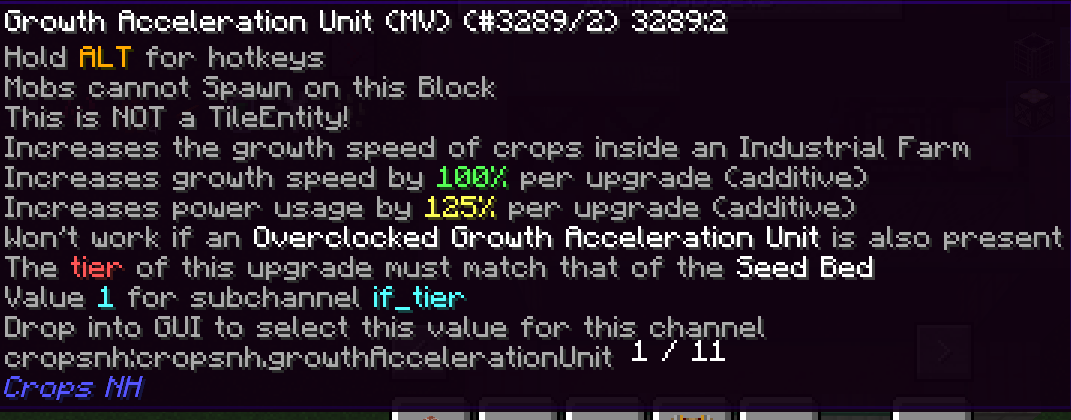
The Growth Acceleration Unit (GAU) is the most basic upgrade; it simply adds a flat 100% to the growth speed bonus while increasing the power usage by 125% of the base power usage. This is the best way to scale an existing installation without having to build more IFs. Unlike all other upgrades, there is no limit on how many GAUs you can install per industrial farm.
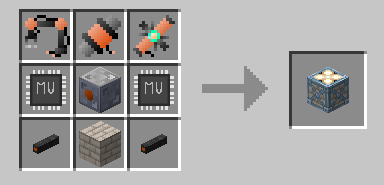
The Fertilization Unit (FU) is a deceptively strong upgrade when paired with GAUs. It multiplies an IF's growth speed bonuses by 1.5 and adds a flat 50% to the harvest bonus. This comes at the cost of a 50% base power increase, requiring enriched fertilizer, and turning off the 90% consumption reduction of enriched fertilizer. You can install only one of these upgrades at a time.
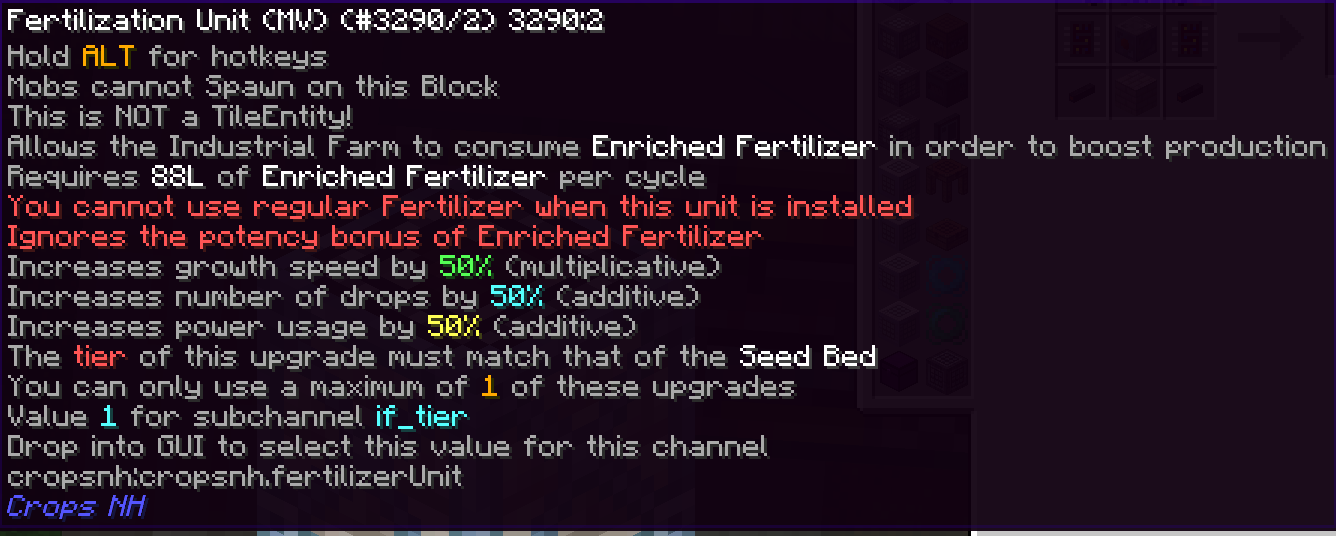
On its own, it doesn't do much, but when paired with other upgrades, it can do a surprising amount; here's a quick example using an EV IF
| # of GAU | # of FU | Speed Bonus | Harvest Bonus | EU/t |
|---|---|---|---|---|
| 0 | 1 | 150% | 230% | 2,880 eu/t |
| 1 | 0 | 200% | 180% | 4,329 eu/t |
| 1 | 1 | 300% | 230% | 5,280 eu/t |
| 2 | 0 | 300% | 180% | 6,720 eu/t |
| 3 | 0 | 400% | 180% | 9120 eu/t |
| 2 | 1 | 450% | 230% | 7,680 eu/t |
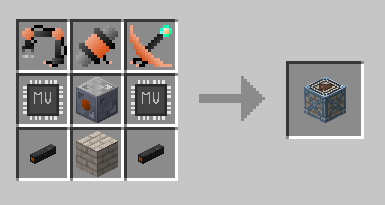
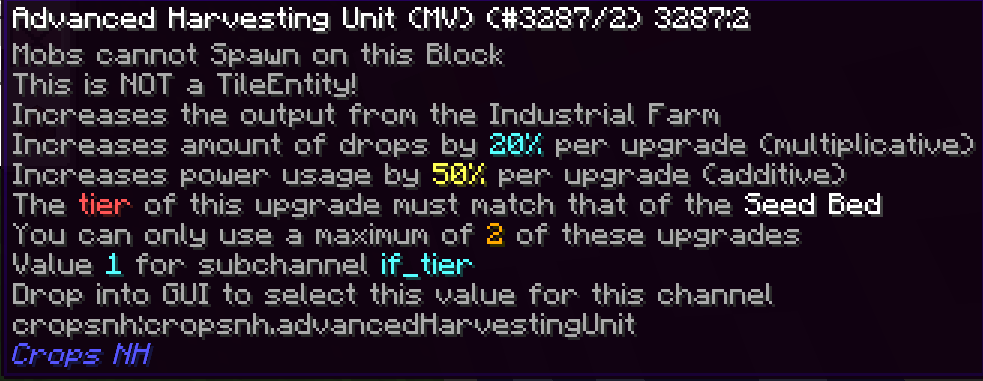
The Advanced Harvesting Unit (AHU) multiplies the harvest bonus by 20% and increases the power usage by 50% of the base power usage. It's one of the pricier upgrades and isn't generally too useful for early farms, but it can have a significant impact on higher-tier farms where the base harvest bonus is much higher. You can only install a maximum of 2 of these upgrades.
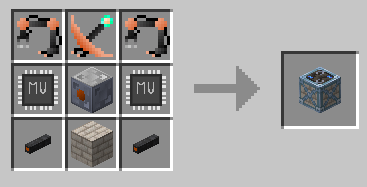
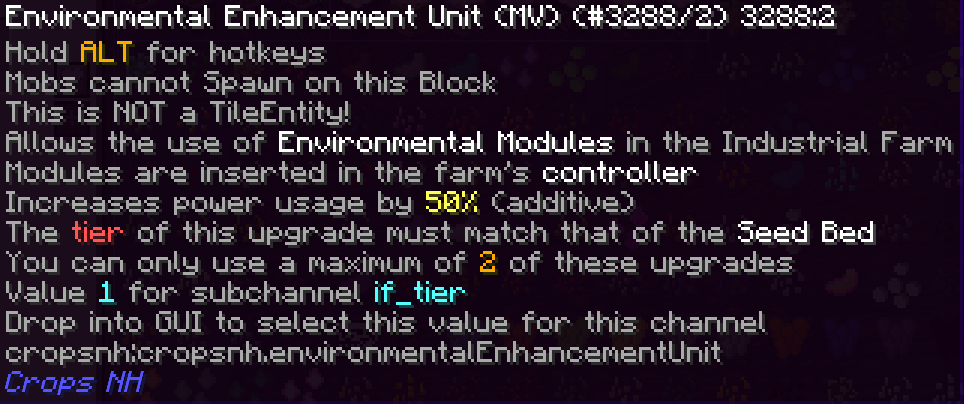
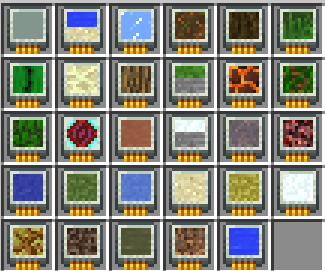
The Environmental Enhancement Unit (EEU) lets you insert environmental modules into the IF's controller to make a certain biome tag available to crops in an industrial farm, improving their nutrient score without changing the biome at the controller through other methods. This comes at the cost of a 50% base power increase.
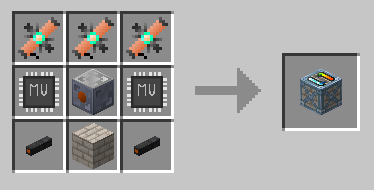
Environmental Modules are inserted inside the farm's controller. The modules themselves aren't that expensive and usually require some relevant blocks or items to craft.

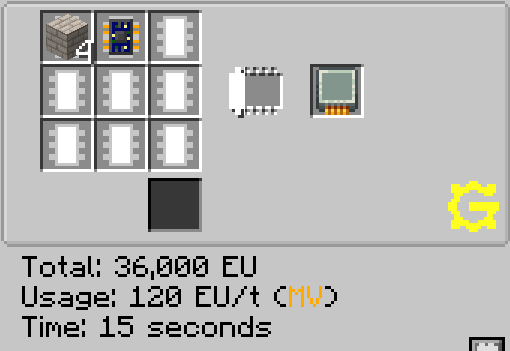
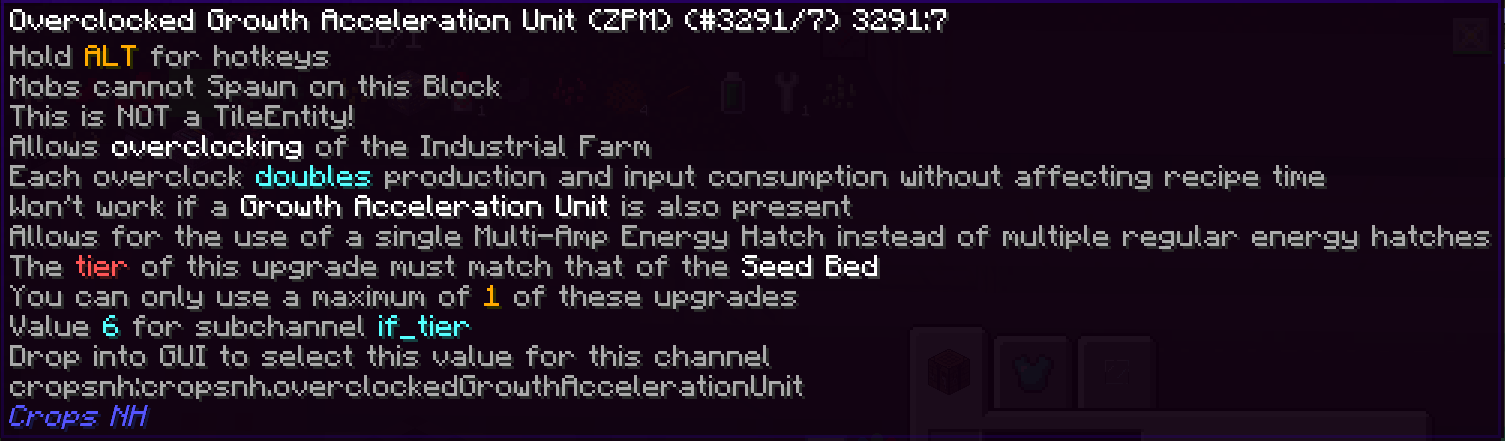
The Overclocked Growth Acceleration Unit (OCGAU) is a more powerful version of the GAU that enables regular overclocking. This upgrade becomes available only after you reach ZPM and also lets you use a single multi-amp energy hatch. Unlike the regular GAU, this upgrade also scales water and fertilizer consumption with each overclock, so you'll need a good supply if you want to use it in the later sections of the game. This upgrade is considered a temporary stopgap while the mega IF is developed for 2.10, and will therefore likely be deprecated in future updates.
Shipped in 21 pull requests
- Improve IF tooltips and textures (and update deps) (CropsNH #43)
- Add some structure channels for the industrial farm and fix survival build. (CropsNH #54)
- Finalize IF Structure Diagnostics (CropsNH #140)
- IF: Fix auto-place and make input bus optional (CropsNH #171)
- Add ICasingTextureProvider to MTEIndustrialFarm (CropsNH #174)
- Add base power cost to seedbed tooltip (CropsNH #211)
- Make Industral Farm change its mode via screwdriver (CropsNH #251)
- Crop balance changes (CropsNH #46)
- Fix IF drop increases being applied multiple times (CropsNH #47)
- Fix partial consumption from fluid stacks in the IF (CropsNH #76)
- Fix NEI hatches (CropsNH #87)
- Fix survival build hatches (CropsNH #88)
- Fix structure localisations in the projector ui (CropsNH #107)
- Switch output mode to output items via mOutputItems (CropsNH #145)
- Fix IF only crops being sometimes harvestable (CropsNH #147)
- Update recipe check lang keys to track gt5u changes (CropsNH #155)
- fix: adapt to new ItemEjectionHelper API parameters (CropsNH #173)
- Construction Tooltips Overhaul (CropsNH #188)
- Fix Industrial Farm item drops (CropsNH #261)
- Update env module textures (CropsNH #268)
- Fix improper tier lookup for energy hatches on the IF (CropsNH #270)
Notable Crop Additions
While the initial release of Crops NH mostly focused on feature parity for crops, it did add a few new crops to the roster.
Rubyne is a new crop that produces ruby.
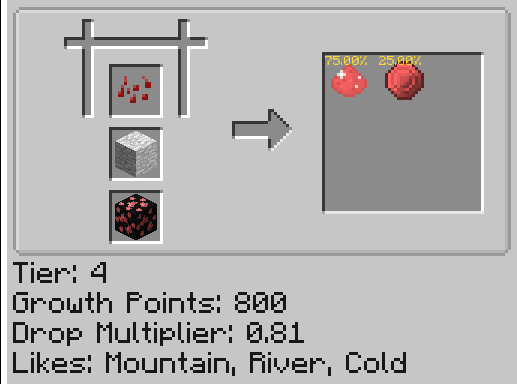
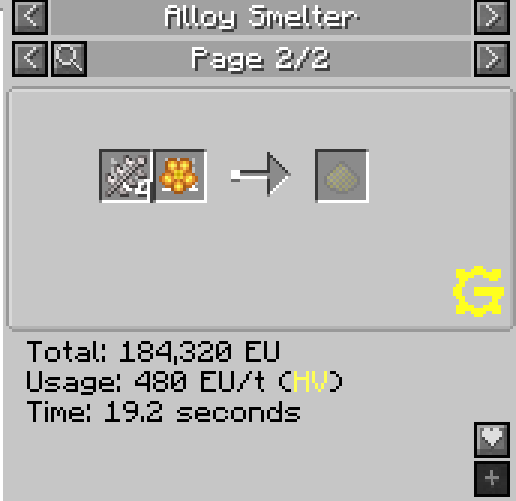
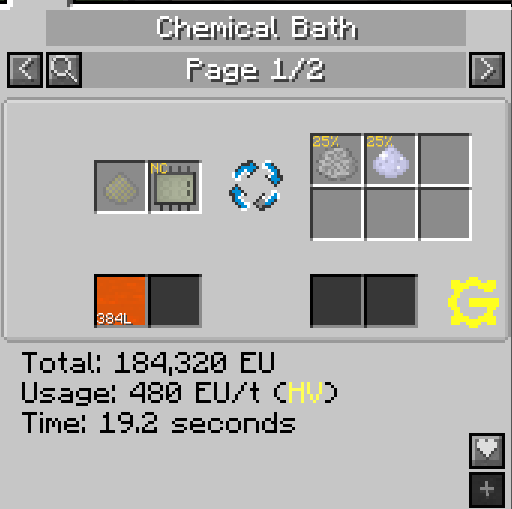
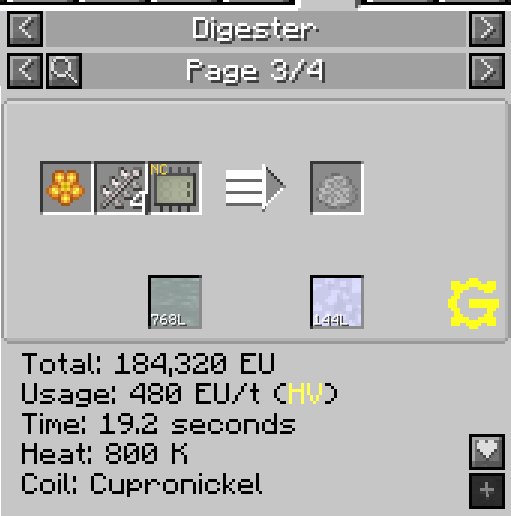
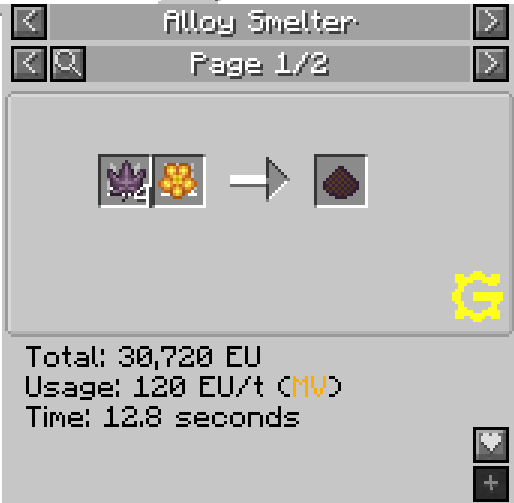
Thiosulfine is a mixed-element sulphur-galena-sphalerite-producing crop. Its primary purpose is to produce sphalerite for early indium concentrate production. Still, it can also produce gallium when processed alongside galvania, or silver when processed with plumbilia in an alloy smelter or digester.
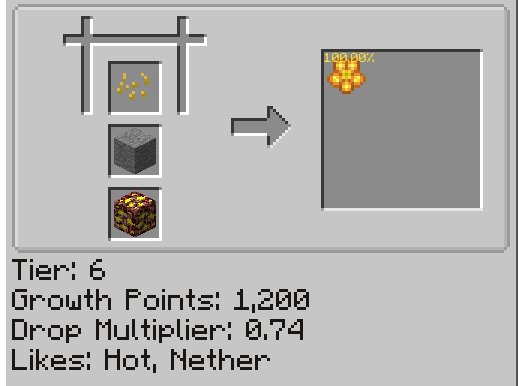
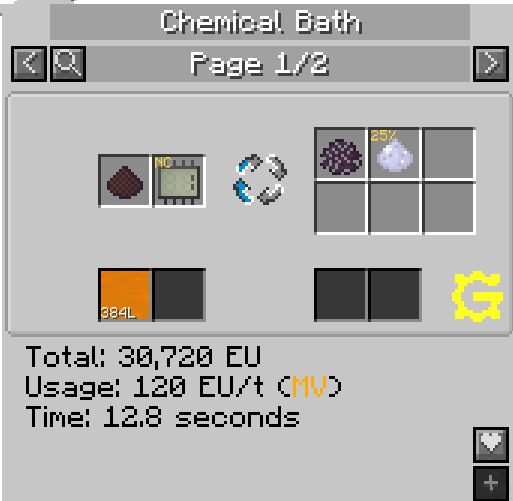
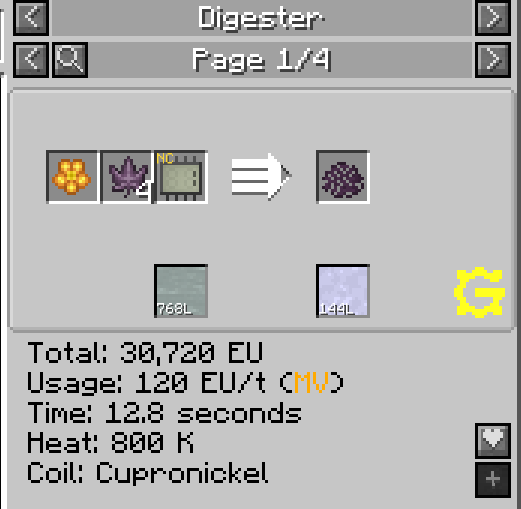
The Slimy Bonsai is a new bonsai type for the Tinkers' Construct Slimy tree. It produces congealed green slime that can be centrifuged into large amounts of glue and rubber pulp. Unlike most other low-tier crops, the slimy bonsai has no mutation pools and cannot be bred without a crop breeder. This is mostly due to its strength in the early game, as the slime tree is balanced around requiring a good dose of exploration in normal gameplay. You can also plant it like any other bonsai, if you can get your hands on a slimy sapling.
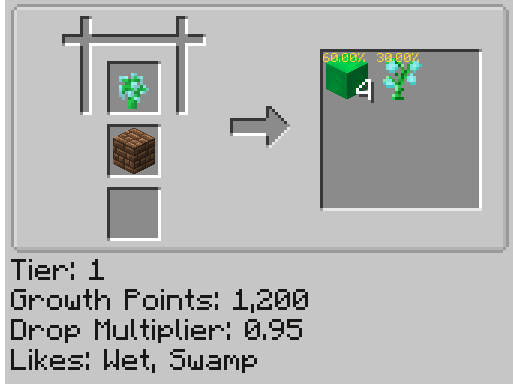
Soul Sand Lily is a very slow-to-grow soul sand-producing crop. It's not ideal as an early-game oil source; it's meant to be a soul sand source, since there aren't many reliable renewable sources of soul sand outside of magic, and because it has very few uses outside of soularium and decorative blocks.
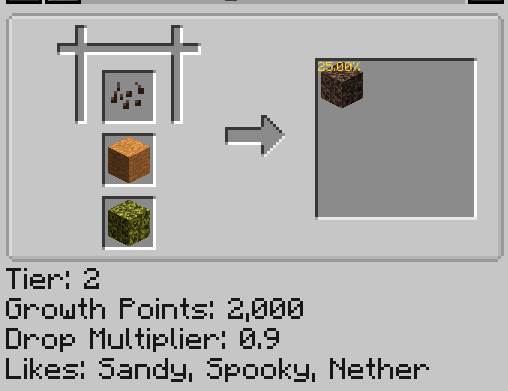
Clay Lily has also been added. Its yield is considerably lower than most other lilies to balance it.
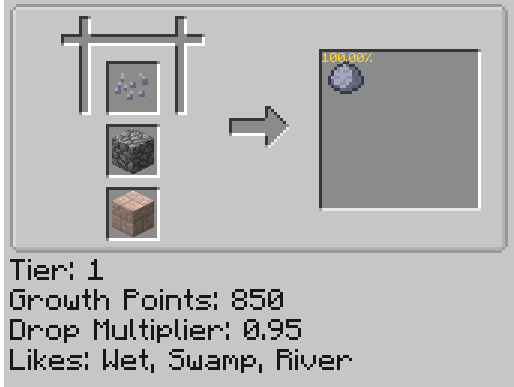
Shipped in: CropsNH #8, CropsNH #86, CropsNH #99, CropsNH #101, CropsNH #102, CropsNH #9, CropsNH #123
Notable crop changes
In addition to updating the textures for nearly every crop, Crops NH also makes a couple of changes to the existing crops:
Many crops have had their growth points to maturity reduced or changed to better align with similar crops. Food crops are a good example, as most were tuned to be around 400 to 800 points to maturity.
Terrawart is now called Gaiawart, and has a new transformation mechanic. Simply right-click some snow blocks onto a netherwart until it turns into a Gaiawart. The starting chance is 1%, and it adds 0.1% for each snow block used. The transformation chance increase caps out at 5%. For most people, it should take roughly a stack of blocks to convert a netherwart into a gaiawart.
Steeleaf now requires a block of steeleaf to grow, and challenge runs can now access knight metal using knight metal berries, thanks to a very unusual recipe involving steeleaf armour and thauminiute armour.
All Metallic Ore Berries now require a block of their respective material to grow.
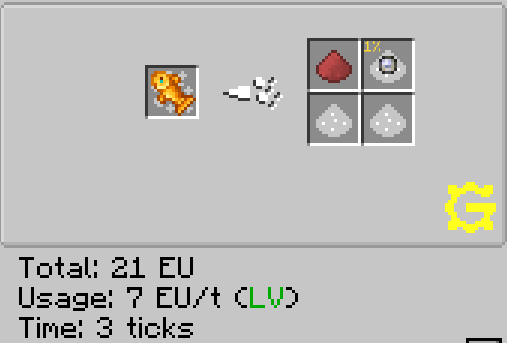
Goldfish no longer output gold nuggets when macerated; they now output mercury. The drop rate was also increased a bit, so at least it now has a proper reason to scream so much. /s
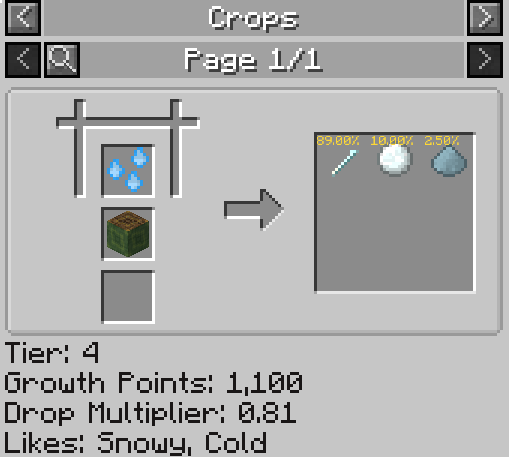
Snowbell now have a very slight chance to drop cryolite dust. This isn't meant to be a viable source; it is more for challenge runs, so you can smelt just enough aluminum to make kanthal coils.
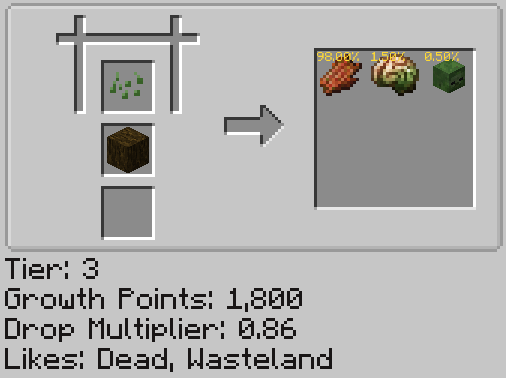
Zomplant now has a very small chance to drop zombie brains and zombie heads.
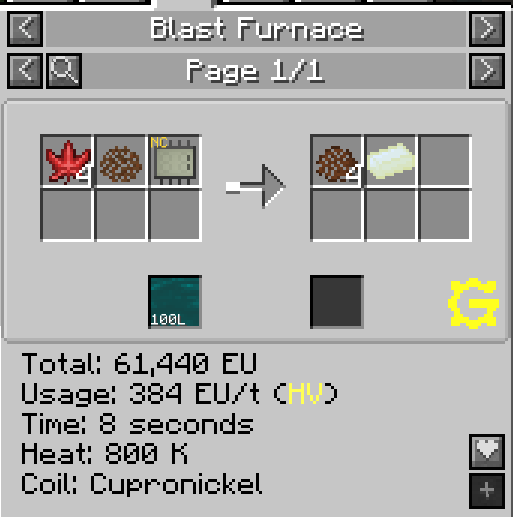
You can now process Pyrolusium alongside crushed tantalite and sodium persulfate using an EBF for a chance at some tantalum.
Shipped in 21 pull requests
- Use propper ore dict for garlic alt seeds. (CropsNH #48)
- Add bop flax as an alt seed for flax (CropsNH #55)
- Balance changes (CropsNH #64)
- Better load panic handling, Soil list refactor and clean-up, and oil berry soil changes (CropsNH #93)
- Remove eye of ender from enderbloom drops (CropsNH #168)
- Water artichoke alt seed, and EFR stone liliy fix and some cleanup (CropsNH #182)
- Change enderbloom duplication catalyst to ender pearl. (CropsNH #184)
- Change the Steeleaf skip recipe to be more in line with other magic essence recipes (CropsNH #185)
- Remove Gaia Wart's food relation and re-add radiation reduction. (CropsNH #210)
- Stonelilies and Lazulia Texture Updates (CropsNH #250)
- Fix drop stack sizes (CropsNH #58)
- Fix liquid-input enriched fertilizer and remove gold from goldfish maceration. (CropsNH #59)
- Add back missing emerald drop to bob's (CropsNH #122)
- allow goldfish to interact with things (CropsNH #126)
- Correct Ardite Berry Drop Count (CropsNH #127)
- Balance Tweaks for 2.9 (CropsNH #176)
- Fix gog steeleaf skip (CropsNH #179)
- Tweak liked biomes of a few low-tier crops. (CropsNH #258)
- Change color of the necrobloom seed (CropsNH #259)
- Fix gaiawart mutation formula (CropsNH #260)
- Allow natural ores to be used as sub-soils and improve NEI sub-soil lists (CropsNH #269)
Updated Crop Quests and Crop Lootbags
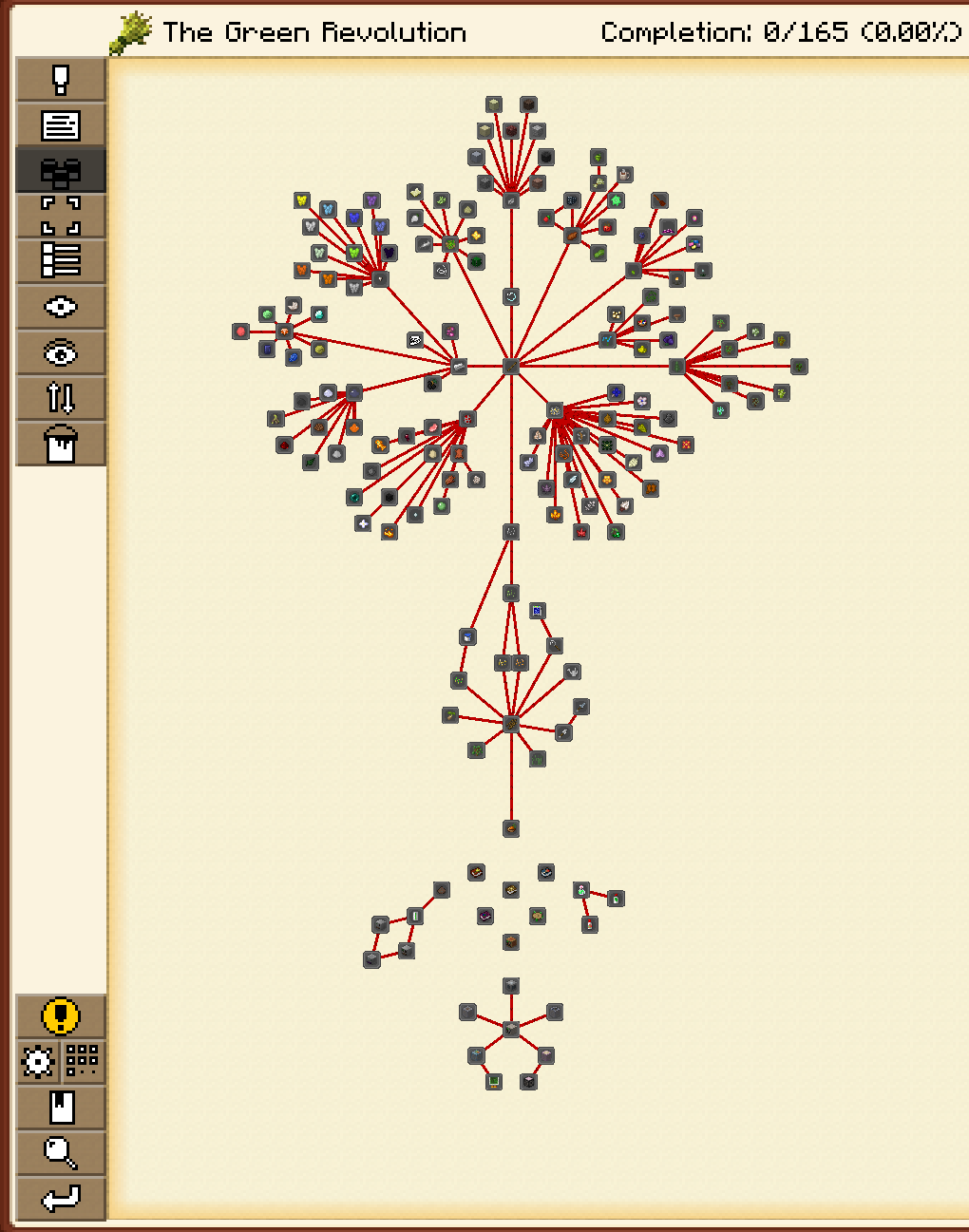
With Crops NH comes a complete revamp of the crop quest tab. These quests contain vital information about crops. They are a must-read if you want to get deep into crops.
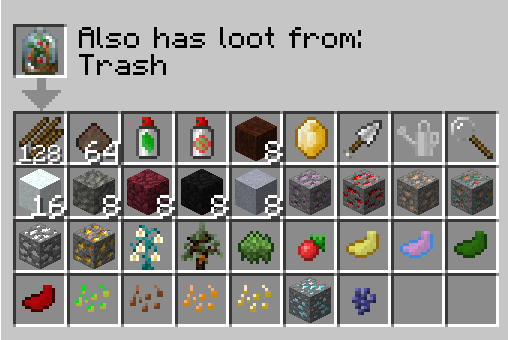
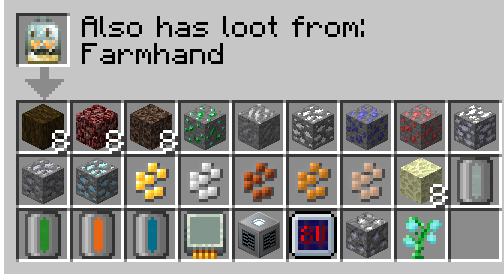
The crop lootbag was split into 2 different bags: the farmhand bag and the agriculturalist bag. The farmhand bag mostly contains basic resources to help you get your farms off the ground, while the agriculturalist bag contains more advanced tools, soils and sub-soils.
Huge shoutout goes to SRoze (Dynamiczbee) for writing most of the new quests!
The farmhand loot bag:
The agriculturalist loot bag:
Shipped in 13 pull requests
- CropsNH Lootbag Enchanting Recipes (NewHorizonsCoreMod #1843)
- CropsNH Prep - Quest and Lootbag Refactor (GT-New-Horizons-Modpack #23254)
- Major revision of Crops Tutorial Quests (GT-New-Horizons-Modpack #24309)
- CropsNH Quest Rebalance and Revisions (WIP) (GT-New-Horizons-Modpack #25643)
- CropsNH Quest Rewards (GT-New-Horizons-Modpack #24530)
- More CropsNH Quest Changes (GT-New-Horizons-Modpack #24241)
- Further CropsNH Quest Changes (GT-New-Horizons-Modpack #23977)
- CropsNH Quests - The Check Your Damn Soil Types PR (GT-New-Horizons-Modpack #23805)
- CropsNH quests: Tracking IF Tweaks and Enriched Fertilizer Corrections (GT-New-Horizons-Modpack #24719)
- Fix IC2 mentions in regards to CropsNH (GT-New-Horizons-Modpack #24672)
- Add clarifications to crop quests (GT-New-Horizons-Modpack #24036)
- Crops NH quest updates (Primordial berry and Glowheat) (GT-New-Horizons-Modpack #26929)
- Add Crop info to Primordial Pearl Quest (GT-New-Horizons-Modpack #27036)
The new and improved NEI tabs
The NEI integration for crops has been completely redone from the ground up. Crops NH adds 4 new crop-specific tabs and 4 more for its single-block machines.
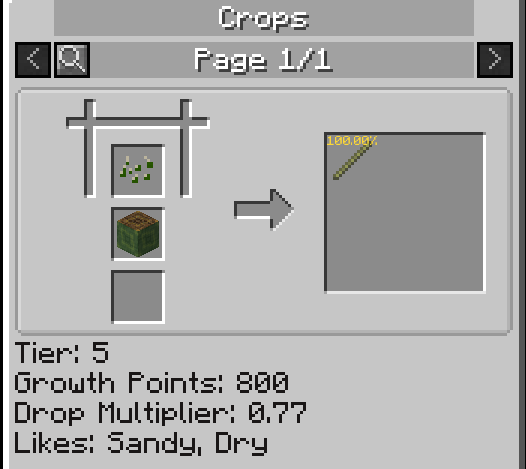
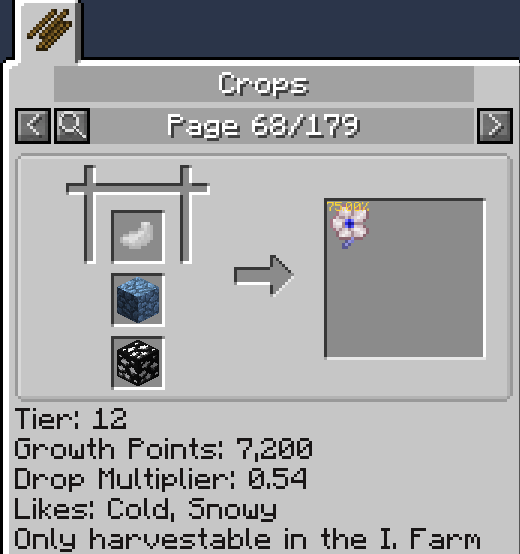
The Crops tab shows you everything you need to know about a crop:
- The output is located on the right side and shows the odds of getting a specific item when harvesting a crop.
- Just below the seed is the crop's soil; hover over it to see a full list of compatible blocks.
- Below that is the sub-soil; hover over it to see all compatible blocks.
- The Tier determines how difficult a crop is to grow. A higher tier means you'll need a higher nutrient score to grow this crop.
- Growth Points is a general indicator of how long it takes to grow. The number of points you get per growth tick depends on a crop's tier, growth stat, and nutrient score. Improving a crop's nutrient score and growth stat is the only way to increase growth speed.
- The Drop Multiplier is a general multiplier on the number of harvest rounds you will get when harvesting a crop. The gain stat multiplies this value by up to ~2.25x. This is an average, so a value below 1 doesn't mean the crop won't drop anything.
- Below are the Liked Biomes Tags; these indicate the biome tags that the crop prefers. Matching biome tags provides the single strongest benefit to your nutrient score, but it's often difficult to achieve without biome changing. To see the tags associated with a biome, use Nature's Compass.
- Below everything else are the Growth Requirements; like soils and sub-soils, you must meet these for the crop to grow or be harvested. When a requirement refers to harvestability, it only refers to harvesting for drops; you can still spread, breed, and stat the crop just fine, and you can even use a spade to harvest seeds, but you won't get any other drops.
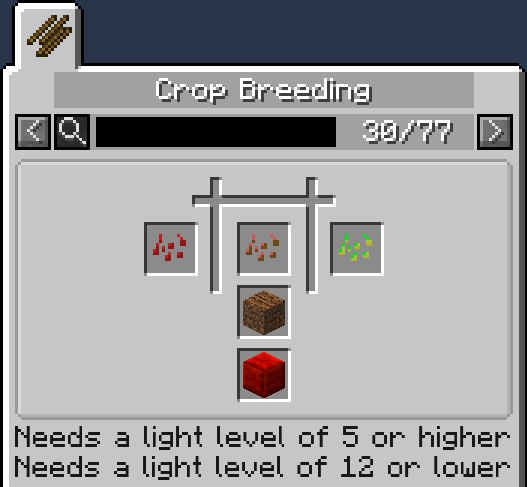
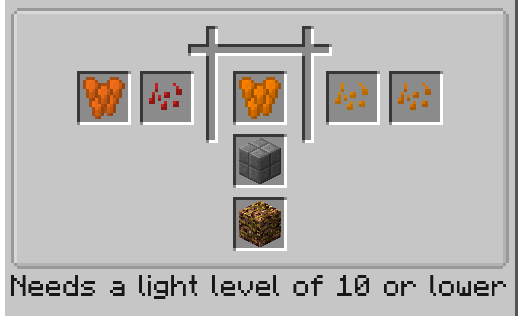
The Crop Breeding tab shows information about deterministic mutations you can perform using crop sticks. Since growth requirements must be met for a mutation to occur, they also appear here.
Mutations with more than 2 parents show all parents in a line; this does not reflect how they must be positioned in-game. All parents must directly touch the double crop stick to trigger a deterministic mutation.
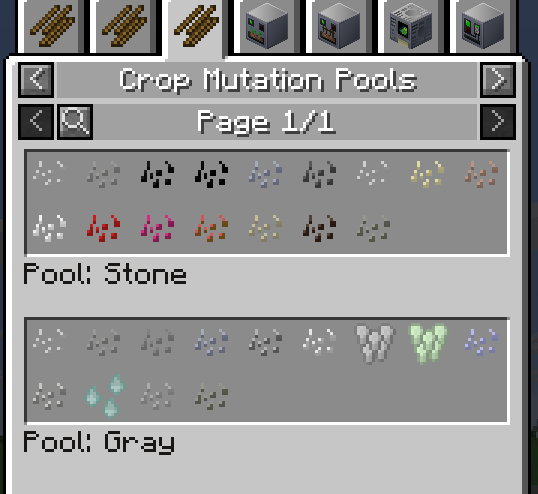
The Crop Mutation Pools tab shows the mutation pools associated with a given crop and all the other members of those pools. Use it to predict or narrow down the potential offspring of random mutations.
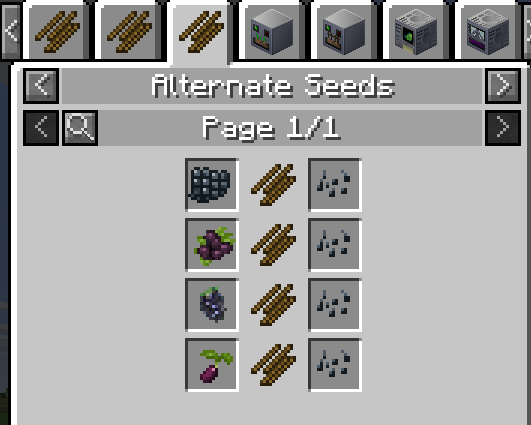
The Alternate Seeds tab shows which items you can plant on a crop stick to create a 1/1/1 analyzed crop.
The Seed Generator tab shows recipes for duplicating seeds. Note that some seeds require additional catalyst items to be replicated, usually a dust or gem of the material related to the seed.
The Crop Breeder tab shows the recipes for the crop breeder. When a crop cannot be bred without a breeder, there won't be a Crop Mutation tab, only a breeder tab.
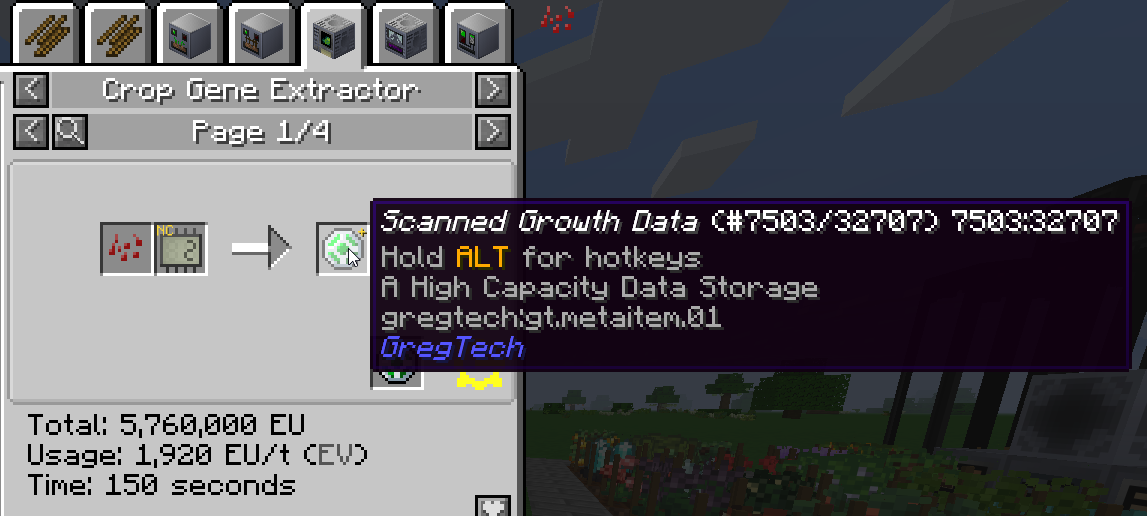
The Gene Extractor and Crop Synthesizer have also received NEI tabs to preview power usage and help calculate UUM costs:
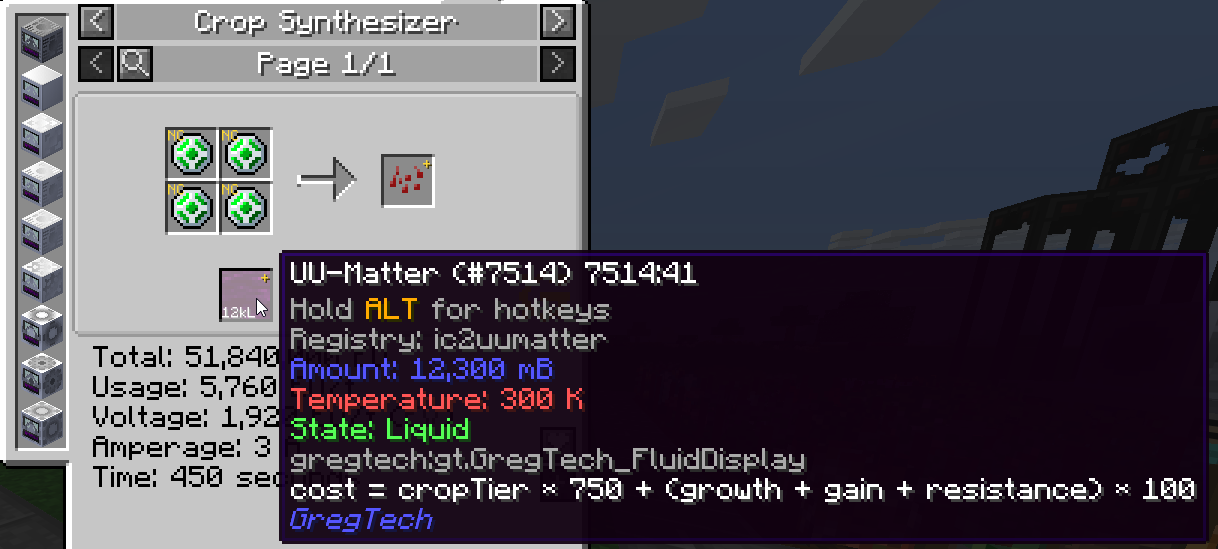
Shipped in: CropsNH #70, CropsNH #163, CropsNH #265, CropsNH #274
Other Notable Miscellaneous Changes
- You can now use a watering can to water your crops.
- Raining now waters your crops as long as they can see the sky.
- The collision box of crop sticks has been shrunk and no longer covers the full block. You can now reach your crop manager without an empty side.
- You can now plant double crop sticks by sneaking while placing them.
- You can now place crop sticks using a builder's wand, and even double crop sticks using the wands from better builder's wands.
- The texture of nearly every crop has been updated.
- You can now use Crops NH fertilizer in forestry multi-farms.
- You can no longer infinitely stack crop layers for a forestry multi-farm.
- You can now use Find-It to find crops in crop fields and seeds in chests. If you search using an unanalyzed seed or crop, it highlights all unanalyzed crops and seed inventories.
Shipped in 19 pull requests
- CropsNH Integration/IC2 Depreciation (CookingForBlockheads #59)
- Shrink collision box for Crop Sticks (CropsNH #34)
- Allow CropsNH fertilizer in Forestry Multifarms (CropsNH #69)
- Add AoE to ExU watering can compat. (CropsNH #106)
- Allow crops that can see the sky to get watered by rain (CropsNH #109)
- Add materialCropLeaf ore dict to material leaf items. (CropsNH #125)
- Add FindIt support to ignore stats on seeds (CropsNH #148)
- Make findit work with planted seeds (CropsNH #149)
- Fix cross crops when sneaking and change sounds to wood (CropsNH #160)
- Add removal noise for cross crop (CropsNH #161)
- add apples to dark oak drop table (CropsNH #192)
- Cleanup Find-It compat (CropsNH #199)
- Fix crop-stick placement behaviour (For 2.9, Regression Fix) (CropsNH #231)
- Cleanup FindIt compat implementation (CropsNH #150)
- Fix localization using server language and hardcoded text (CropsNH #233)
- Default the seed amount to one when planting or harvesting seeds. (CropsNH #276)
- Watering can fix for good this time (CropsNH #282)
- Add ExU watering can to default config (Backhand #201)
- Cleanup fertilizer recipes declarations (CropsNH #275)
What does this mean for my existing world?
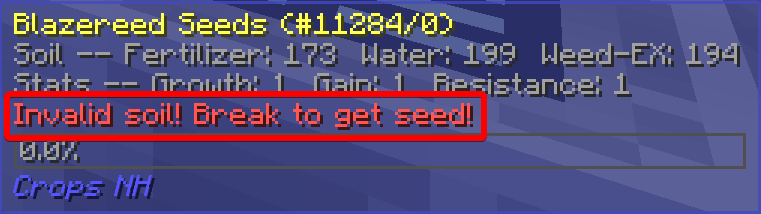
Since Crops NH is intended to replace IC2 crops fully, it includes a set of automatic world migrations. All existing IC2 crops will be automatically migrated to Crops NH crops. Crops that no longer meet their soil requirements will be converted into a "transitory" version of themselves. In Waila, they'll have a red tooltip line saying "invalid soil, break to get seed". Breaking those crops is guaranteed to drop a seed, regardless of the resistance stat.
A core principle of Crops NH is that outputs shouldn't depend on a crop's environment; this boosts performance a lot, but it also causes a few issues since that was a thing with the old crops. This meant that we had to split these crops into new species for all the potential variations. Since the CropsNH migration is automatic, we had to pick a default crop for these to transform into, since the migration tools can't safely access the blocks surrounding what they're transforming.
This table lists all the splits that will occur and what the default migration will be
| Original | New Crop | Migrates to |
|---|---|---|
| Yellow Stone Lily | Sand Lily, End Stone Lily | Sand Lily |
| Red Stone Lily | Red Granite Lily, Granite Lily | Red Granite Lily |
| Black Stone Lily | Black Granite Lily, Basalt Lily | Black Granite Lily |
| White Stone Lily | Marble Lily, Diorite Lily | Marble Lily |
| Gray Stone Lily | Stone Lily, Andesite Lily | Stone Lily |
| Magic Metal Berry | Thaumium Berry, Thauminite Berry, Void Metal Berry | Thaumium Berry |
| Quantaria | Iridine, Osmianth | 1/4 to become Osmianth, 3/4 to become Iridine |
While Crops NH did its best to retain full feature parity, one crop didn't make the cut during the transition: The Eating Plant was removed and will be migrated to Cactus.
The duplicated mushroom variants added by Crops++ and GregTech have finally been unified under a single crop.
world data - GT5-Unofficial #5652
Shipped in: CropsNH #10, CropsNH #78, CropsNH #195, GT5-Unofficial #5652, NewHorizonsCoreMod #1604, CropsNH #20, CropsNH #136
What about the crop bot?
The initial release of Crops NH does not include any compatibility for Open Computers. We left it out because we didn't want it to be a crutch to fall back on if the new mechanics just weren't fun to play with. We're confident we've achieved this goal, and OC compatibility in future might be added back at some point, but for the moment there is no plan to re-integrate it.
TL;DR: Your crop bot has served you well, but its time has come. May it rest peacefully in the fields above.
Contributors
Everyone who authored, reviewed or co-authored a change on this page, with how many of them:
@C0bra5 (157), @UltraProdigy (72), @Dream-Master (41), @LazyFlesh (27), @koolkrafter5 (19), @boubou19 (17), @Dynamiczbee (12), @danyadev (6), @Ethryan (5), @Algent (4), @Eldrinn-Elantey (4), @Pxx500 (4), @Yoshy2002 (4), @Alexdoru (3), @Auynonymous (3), @june-dev-username (3), @OTPANNIEXD (3), @VortexSo4 (3), @evgengoldwar (2), @Luca-Guettinger (2), @MLGfruitshoot (2), @Ranzuu (2), @Ruling-0 (2), @tiffit (2), @ABKQPO (1), @alfarelcynthesis (1), @Angry3vilbot (1), @AnsonYeung (1), @Caedis (1), @Calvin304 (1), @Chitak985 (1), @DylanTaylor1 (1), @Fib4ik (1), @hinyb (1), @jude123412 (1), @Kogepan229 (1), @kuba6000 (1), @leagris (1), @LunaDziaba (1), @Lyfts (1), @MarloGr (1), @Nikolay-Sitnikov (1), @PLASMAchicken (1), @POPlol333 (1), @Sanduhr32 (1), @StellaCaerulea (1), @TheYoingLad (1), @vermz99 (1), @Worive (1)